Dental Veneers in Moama Dental
At our practice, we provide high-quality dental veneers at our Moama clinic, to help you achieve the smile you’ve always wanted.
At our practice, we provide high-quality dental veneers at our Moama clinic, to help you achieve the smile you’ve always wanted.
Dental veneers are one option that may be considered for improving the appearance of teeth in suitable cases. They are designed to resemble natural teeth and are commonly used for aesthetic dental purposes.
Despite their strength, teeth can break, and incorrect brushing techniques over time can wear away the enamel. This is a concern since enamel cannot regrow after it has been destroyed or degraded. In some cases, dental veneers may be used as part of a treatment plan to help protect exposed tooth surfaces from further wear, depending on individual circumstances.
Dental enamel is not replaceable once lost, but its effects can sometimes be managed or restored using dental treatments.
The term “tooth/dental veneer” refers to a thin shell of ceramic or resin that covers the front of your teeth. Dental veneers are manufactured specifically to fit the individuals’ teeth. They are designed to resemble natural teeth but are only placed on the front of a tooth as a cosmetic treatment.
Veneers are created using either resin composite or ceramic. Most people choose ceramic veneers because they have a natural appearance and are durable. Each veneer is made specifically for you, to fit the shape and size of your existing teeth and improve the appearance of your teeth & smile. They are used to address a tooth that is too short, chipped, worn down, or discoloured, and in some cases may be considered where minor alignment issues are present.
Depending on your preferences and clinical suitability, porcelain veneers or composite veneers are available at our Moama clinic following an appropriate clinical assessment.
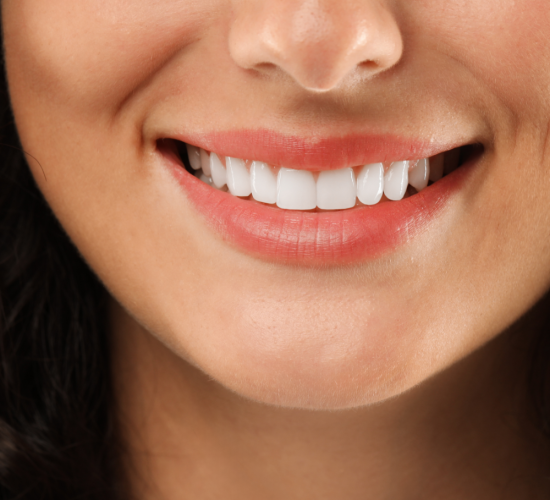
In some cases, veneers can be used to address the appearance of minor misalignment as part of an aesthetic treatment plan, following a thorough clinical assessment. They can also be used to close gaps between teeth or cover oddly shaped teeth. If your teeth are mildly worn down or chipped a veneer may help improve their appearance. Discoloured teeth that do not respond to teeth whitening may also be considered for veneers, depending on individual circumstances.
Both porcelain and composite veneers are available at our Moama clinic, allowing you to discuss options that suit your individual needs, lifestyle, and budget, following a clinical assessment.
Porcelain veneers are thin, custom-made shells crafted in a dental lab. Porcelain veneers are intended to replicate the light-reflecting qualities of natural teeth and are generally durable and stain-resistant, although outcomes can vary based on care and individual factors. They’re often chosen where longer-term aesthetic outcomes are desired, depending on suitability.
Composite veneers, on the other hand, are applied in a single visit using a tooth-coloured resin directly sculpted on your teeth. While they’re generally more cost-effective and quicker to apply, composite veneers may require more maintenance over time compared to porcelain.
Here is a quick overview of the key differences between the two types:
| Feature | Porcelain Veneers | Composite Veneers |
|---|---|---|
| Material | High-quality dental ceramic | Tooth-coloured resin |
| Durability | Often 10–15 years with care (varies by patient) | Often 4–8 years (varies by patient) |
| Aesthetic Finish | Natural appearance | Less reflective than porcelain |
| Procedure Time | 2–3 appointments | Usually one visit |
| Cost | Higher cost | Lower cost |
| Stain Resistance | Excellent | Moderate |
No matter what your goals, we are here to walk you through the pros and cons of both of these options, so that you can make an informed decision based on clinical advice.
| Feature | Porcelain Veneers | Composite Veneers |
|---|---|---|
| Material | High-quality dental ceramic | Tooth-coloured resin |
| Durability | Often 10–15 years with care (varies by patient) | Often 4–8 years (varies by patient) |
| Aesthetic Finish | Natural appearance | Less reflective than porcelain |
| Procedure Time | 2–3 appointments | Usually one visit |
| Cost | Higher cost | Lower cost |
| Stain Resistance | Excellent | Moderate |
No matter what your goals, we are here to walk you through the pros and cons of both of these options, so that you can make an informed decision based on clinical advice.
The procedure will differ based on whether you are getting porcelain or composite veneers. However, the one thing that will be common to both is the initial consult, in which our dentist will do a thorough evaluation, which may include X-rays. You’ll also learn about the differences between porcelain veneers and composite veneers, including their benefits and limitations.
While veneers are a popular option for changing the appearance of teeth, they aren’t right for everyone.
You may be a good candidate for composite or porcelain veneers if you:
However, veneers may not be suitable if:
During your personalised consultation, our team will evaluate your dental health and goals to determine whether dental veneers at our Moama clinic are the most appropriate treatment for you.
Dental veneers may be used as part of a treatment plan to improve the appearance of teeth, where clinically appropriate. A consultation is required to determine suitability.
They are either made of:
Porcelain veneers may last anywhere from 10 to 15 years or more with proper care, while composite veneers generally last around 5 to 7 years. Longevity also depends on factors like oral hygiene, teeth grinding, and diet. A dentist can provide guidance on how to help extend the life of your veneers.
While some tooth preparation is required for veneers, they usually do not damage natural teeth when placed correctly. Composite veneers require little to no enamel reduction. With porcelain veneers, a thin layer of enamel is usually removed to ensure a proper fit. Dental professionals use conservative techniques to preserve natural tooth structure.
Yes, it’s possible to have a veneer placed on a single tooth if it is chipped, discoloured, or slightly misaligned. Both porcelain and composite veneers may be used for single-tooth enhancements. Veneers are customised to match surrounding teeth.
Nothing lasts forever, but you can help maintain veneers by practicing good oral hygiene with regular brushing and flossing. Veneers should be brushed as you would natural teeth. If a veneer chips or cracks, it can be replaced by a dental professional. Proper care may help prolong the life of veneers.
Some private health insurance policies may cover part of the cost of veneers. Check your Extras Dental Cover and speak with your health provider for details.