

Shape Your Smile Without Wires
Straighten your teeth with clear aligners that may be suitable for you in Moama
Straighten your teeth with clear aligners that may be suitable for you in Moama
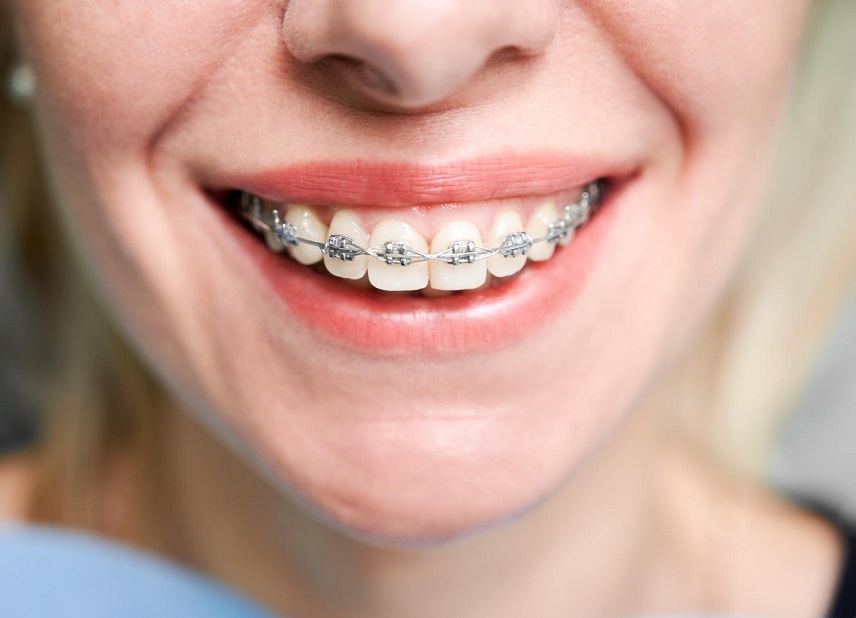
Choosing between clear aligners and traditional braces can be challenging, especially if you’re unsure which method may be suitable for your teeth.
While clear aligners can be an effective method for some patients to straighten teeth, it may not be appropriate for all dental situations. A dental assessment is required to determine whether clear aligners are suitable for your individual needs. Traditional braces may be recommended for more complex orthodontic issues, whereas clear aligners may be considered for less complicated alignment concerns.
At Moama Dental, patients can receive guidance and information about clear aligners like Angel Aligners and Invisalign in Moama during a clinical assessment. Our team can help you understand your options and discuss a treatment plan that may be appropriate for your oral health needs.

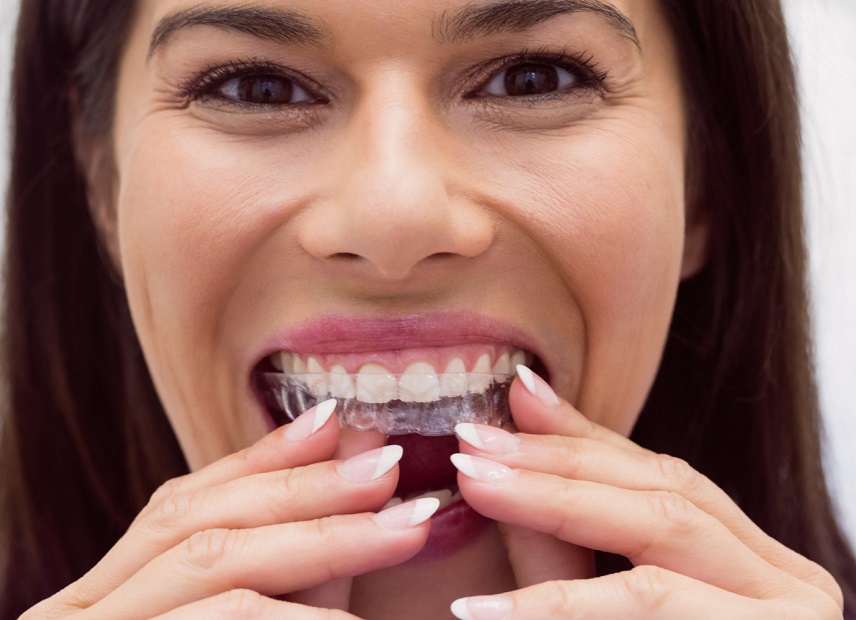
Clear aligners serve as an alternative to conventional braces for certain patients, including adults, depending on their specific dental needs. Because the aligners are nearly transparent, they may be less noticeable than traditional braces, and they are typically removed for eating and oral hygiene.
The transparent aligners are designed using computer‑aided design (CAD) technology and are generally replaced every one to two weeks. Each set is intended to gradually guide the teeth toward their planned positions under professional supervision.
Orthodontic appliances for patients with clear aligners are often reported to be more comfortable than some traditional braces. The smooth, thin aligner trays are custom-made and designed to minimise rough edges that could irritate your lips, cheeks, or other areas of the mouth.
For some adults, clear aligners may be a suitable option compared with other orthodontic treatments. This is because clear aligners can help align teeth while being less noticeable than traditional braces. Due to their transparency, many people may not easily notice that you are wearing them.
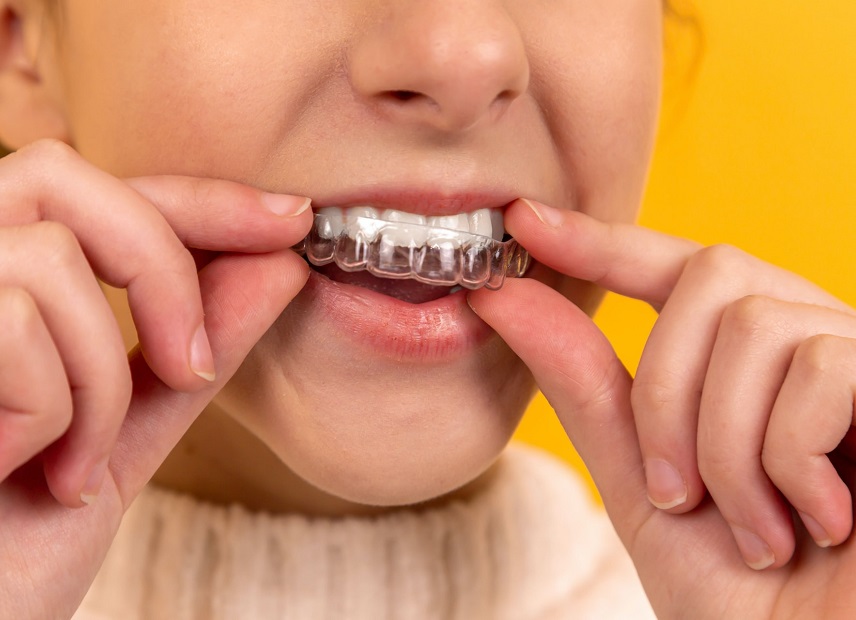
Since the aligners are removable, you can eat most foods after taking them out.
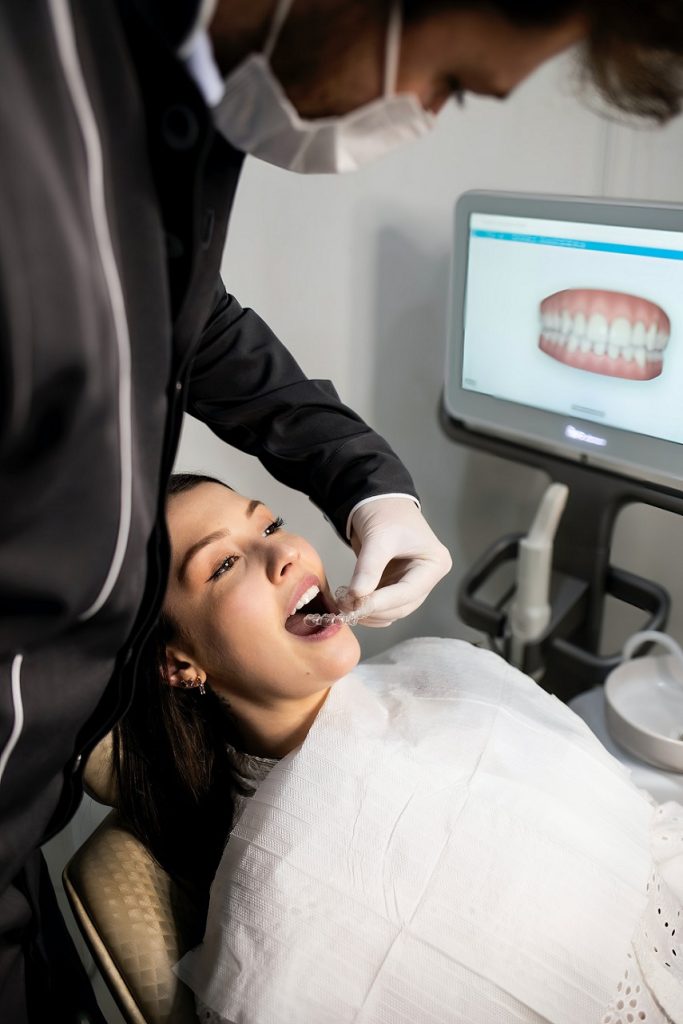
At the first meeting, a dental professional will assess whether clear aligners may be appropriate for your teeth. This discussion covers your concerns, goals, treatment options, estimated timeframes, and pricing structures. All of this information helps the dental team develop a treatment plan tailored to your individual needs.
During this stage, the dental team takes 3D scans, impressions, photographs, and X‑rays to evaluate your teeth and support planning for potential orthodontic treatment.
After creating an individual plan, a simulation may be provided to help visualise potential changes in your tooth alignment.
Attachments may be bonded, and aligners are fitted with instructions provided on how to wear and care for them.
Patients are reviewed periodically to monitor fit and progress, and adjustments may be made if necessary.
At the end of treatment, attachments are removed, photographs may be taken, and retainers are provided to help maintain tooth positions. Results can vary, and patient satisfaction depends on individual response to treatment.